
BaltixSport Is Permanently Relocating to Lithuania
BaltixSport is relocating from London to Lithuania, strengthening its presence in the Baltics to better support athletes and families pursuing U.S. college opportunities.

BaltixSport is relocating from London to Lithuania, strengthening its presence in the Baltics to better support athletes and families pursuing U.S. college opportunities.
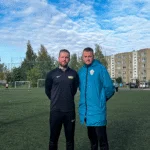
BaltixSport partners with Bitės MFA to help grow the women’s game from the academy level. Together, they’ll create new pathways for young Lithuanian footballers to study and play in the U.S.
BaltixSport announces its first Estonian academy partnership with Viimsi MRJK. Discover how this collaboration will create new opportunities for Estonian football players to pursue U.S. college scholarships.

BaltixSport is relocating from London to Lithuania, strengthening its presence in the Baltics to better support athletes and families pursuing U.S. college opportunities.

BaltixSport partners with Bitės MFA to help grow the women’s game from the academy level. Together, they’ll create new pathways for young Lithuanian footballers to study and play in the U.S.

BaltixSport announces its first Estonian academy partnership with Viimsi MRJK. Discover how this collaboration will create new opportunities for Estonian football players to pursue U.S. college scholarships.
College athletics in the United States just entered a new era. In 2025, a $2.8 billion legal settlement and a sweeping executive order reshaped how athletes—especially at the NCAA Division I level—are recruited, paid, and supported. For Baltic student-athletes and their families exploring the U.S. college route, understanding these reforms is crucial.
From direct athlete compensation to new rules aimed at preserving scholarships and supporting non-revenue sports, here’s everything you need to know about how U.S. college sports are changing—and what it means for your scholarship opportunities.
The House v. NCAA case, filed in 2020, challenged longstanding NCAA rules restricting athlete compensation for Name, Image, and Likeness (NIL). The lawsuit escalated into a broader antitrust battle over the NCAA’s limits on how athletes could be paid.
On June 6, 2025, U.S. District Judge Claudia Wilken approved a $2.8 billion class-action settlement. Starting July 1, 2025, NCAA Division I schools that opt in can directly pay athletes through revenue-sharing models.
This historic ruling replaces old scholarship caps with sport-specific roster limits and introduces a new oversight body—the College Sports Commission—to ensure fair implementation.
Note: The damages portion of the settlement is being appealed in the Ninth Circuit, meaning some payments may be delayed until 2026 or later.
One early example is the University of Texas, which has committed to distributing the full $20.5 million allocation. Their proposed breakdown:
However, this shift brings budget challenges. The university anticipates an additional $9 million in scholarship obligations, forcing some departments to reallocate funds and reconsider priorities.
Smaller universities—especially those outside major conferences—face tough decisions about opting in, complying with Title IX, and maintaining support for non-revenue sports like tennis, swimming, and women’s soccer.
In response to the legal settlement and growing concerns over NIL-related exploitation, President Trump signed an Executive Order titled “Saving College Sports” on July 24, 2025.
The order seeks to:
It also addresses growing confusion and inconsistency across states due to conflicting NIL laws.
The combination of the House v. NCAA settlement and the “Saving College Sports” executive order signals the end of amateurism as we knew it in U.S. college sports. For international student-athletes—especially those from the Baltics—this presents both opportunities and new challenges.
It’s now more important than ever to:
BaltixSport is here to help you navigate this changing system and make smart, informed decisions for your athletic and academic future in the U.S.
House v. NCAA Settlement Summary – AP News
A comprehensive overview of the $2.8 billion antitrust settlement that paved the way for direct athlete compensation.
Legal Analysis – Jackson Lewis LLP
Detailed legal perspective on how the settlement establishes the College Sports Commission, revenue‑sharing caps, reporting systems like CAPS and NIL Go, and opt‑in/opt‑out rules.
Executive Order Fact Sheet – The White House
Official presidential fact sheet summarizing the “Saving College Sports” executive order signed July 24, 2025.
NIL and College Sports Reform – JD Supra
Analysis of federal reform proposals and the broader context for standardizing NIL and antitrust rules via executive action and pending legislation.
Title IX Protections in College Athletics – Morgan Lewis
Insight on how Title IX compliance is expected to shape institutional response in the wake of federal directives and policy changes.